March 11, 2026 · 5 min read
How to Scale a Fashion Brand Without Burning Out

The Production Systems Most Designers Realize They Need Too Late
Starting a fashion brand requires creativity, instinct, and vision.
Scaling one requires something different.
Behind every sustainable fashion brand sits a set of operational systems that most people never see, the production timelines, supplier workflows, costing structures, and product data that quietly hold everything together. Without those systems, growth can start to feel surprisingly heavy.
Many founders experience this shift gradually. At first, everything feels manageable, production notes live across spreadsheets, supplier conversations happen through email or WhatsApp, costing lives in different documents and for a while, that works.
But as the brand grows, so does the complexity.
More styles. More materials. More factories. More moving parts across every collection.
Suddenly the systems that once supported the brand begin to feel fragile. Not because the business is failing, because the business is evolving.
The Real Reason Many Fashion Brands Struggle to Scale

When founders feel stuck in growth, they often assume the issue is marketing, or visibility, or design direction. But more often than not, the real challenge lives inside the operational structure of the business. The way your business operates at 100 units per season is very telling of how it will operate when you are producing 2,500 units per season.
Growth introduces complexity in ways that are easy to underestimate:
- more SKUs to track
- more supplier relationships to manage
- more timelines to coordinate
- more financial pressure to maintain healthy margins
Without organized production systems, this complexity slowly turns into friction. Production timelines start slipping, supplier communication becomes fragmented, costing becomes harder to track clearly, margins begin shrinking in subtle ways.
Instead of feeling excited about growth, founders start feeling like they’re constantly putting out fires. And the business becomes harder to run the more successful it becomes.
Visionaries should be more focused on next season’s design, not what stage their production from three seasons ago is sitting in.
The Hidden Costs of Disorganized Fashion Production
Operational chaos rarely appears as one dramatic problem, instead, it shows up in small decisions that quietly cost the business money.
For example:
Rush freight costs
Production delays often lead to expensive last-minute shipping to meet delivery deadlines, this applies to both samples and final production.
Inventory imbalances
Without accurate production planning, brands may overproduce some styles while running out of others.
Supplier miscommunication
When product information is scattered across emails and documents, important details get lost.
Unclear costing structures
When costing systems aren’t centralized, it becomes difficult to understand true product margins.

None of these problems seem catastrophic in isolation.
Together though they slowly erode the stability and profitability of the business. Creative vision might still be strong, but the operational foundation beneath it hasn’t caught up.
Why Production Systems Protect Creative Energy
There’s a common belief in fashion that building systems makes a brand feel rigid.
Corporate, less creative.
In reality, the opposite tends to happen.
When production workflows are organized…
When supplier communication is clear…
When costing and timelines are visible…
Something important shifts.
The founder’s mental load decreases, creative decisions become easier, collections feel more intentional. Structure doesn’t replace creativity. It protects it.
It creates what I often describe as structure that feels like luxury, a business that moves calmly instead of reactively.
Signs Your Fashion Brand Has Outgrown Its Current Systems
Many founders reach a point where their brand is growing, but operations are still running the way they did in the early stages.
Some common signals include:
- You personally manage most supplier communication
- Production timelines constantly shift or feel unclear
- Costing lives across multiple spreadsheets
- Launching a new collection feels overwhelming
- You’ve become the operational bottleneck in your own company
This stage is incredibly common.
It simply means the business has reached a new level of complexity.
And complexity requires structure.
The Operational Infrastructure Behind Scalable Fashion Brands
Brands that scale sustainably usually develop strong systems across a few key operational areas.

Centralized Product Information
Product details, materials, tech packs, and production notes live in one organized place rather than scattered across documents.
Clear Production Timelines
Each collection follows a mapped production calendar so factories, samples, and delivery dates stay aligned.
Structured Supplier Communication
Factories and suppliers are managed through organized workflows rather than fragmented conversations.
Transparent Costing and Margin Tracking
Centralized costing allows founders to make confident pricing and production decisions. These systems may not be visible to customers, but they are what allow a brand to grow without constant operational stress.
The Moment Many Fashion Founders Realize They Need Operational Support
One shift happens quietly as fashion brands grow. The founder becomes the center of every operational decision.
Every supplier question, costing update, production timeline. At first this feels responsible. But over time it becomes exhausting. Not because founders aren’t capable, but because the role they’re trying to hold eventually becomes too large for one person.
The brands that scale sustainably eventually build operational systems, and often operational support, that allow the founder to step out of constant production management. Not to disconnect from the work, but to lead it more clearly.
The Work Oceo Luxe Does
At Oceo Luxe, the focus has always been helping designers move from reactive production management to calm, organized operational systems.
That means helping fashion brands:
- build production workflows that actually support growth
- organize supplier relationships and communication
- create clear timelines for collection development
- develop costing and margin visibility
- build systems that reduce operational overwhelm
Fashion businesses are complex.
But complexity doesn’t have to mean chaos.
With the right structure, production becomes calmer.
Decisions become clearer.
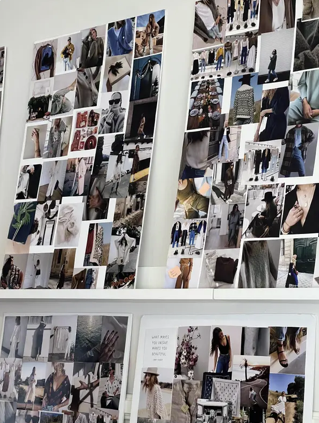
And founders gain the space to focus on creative leadership instead of constant operational problem-solving. Turning ideas into momentum — and creative vision into organized reality.
If Your Fashion Brand Is Entering a Growth Stage
If your brand is beginning to scale and production is starting to feel heavier behind the scenes, it may simply be time to build stronger operational systems.
Not more hustle. Just better structure.
Because the brands that grow sustainably aren’t the ones working the hardest.
They’re the ones supported by the clearest systems.
At Oceo Luxe, I help fashion brands build the systems that allow creativity and production to work together sustainably.
You can learn more about the operational support available here.