
How to Build a Production Calendar That Actually Works for Your Brain
Fashion production calendar | How to plan clothing production | Production planning for designers
You have probably tried the color-coded spreadsheet. The project management app with seventeen views. The sticky notes across your studio wall that felt motivating for exactly four days. And still, somewhere around week three of a new collection, everything collapses into a pile of overdue tasks, missed sample deadlines, and a creeping sense that you are behind on something you cannot quite name.
Here is what none of those tools accounted for: you are a creative founder running a production operation. That combination requires a calendar system that holds both the factory timeline and the human being managing it.
This is not a post about working harder or getting more organized. It is about building a production calendar that is actually designed for the way your brain works, not the way a generic project manager assumes it works.
The Problem with Standard Production Timelines
Most production calendars are built around deadlines only. They tell you what needs to happen and when, but they say nothing about the cognitive and creative load involved in getting there. They treat "approve final tech pack" the same as "send follow-up email to factory," when anyone who has actually done this work knows those two tasks live in completely different categories.
When you stack high-decision tasks back to back, across weeks, with no buffer for creative thinking or recovery, the calendar becomes a source of dread instead of a tool for clarity. You start avoiding it. The deadlines still exist. The anxiety compounds.
The fix is not a better app. It is a different framework for how you build the timeline in the first place.
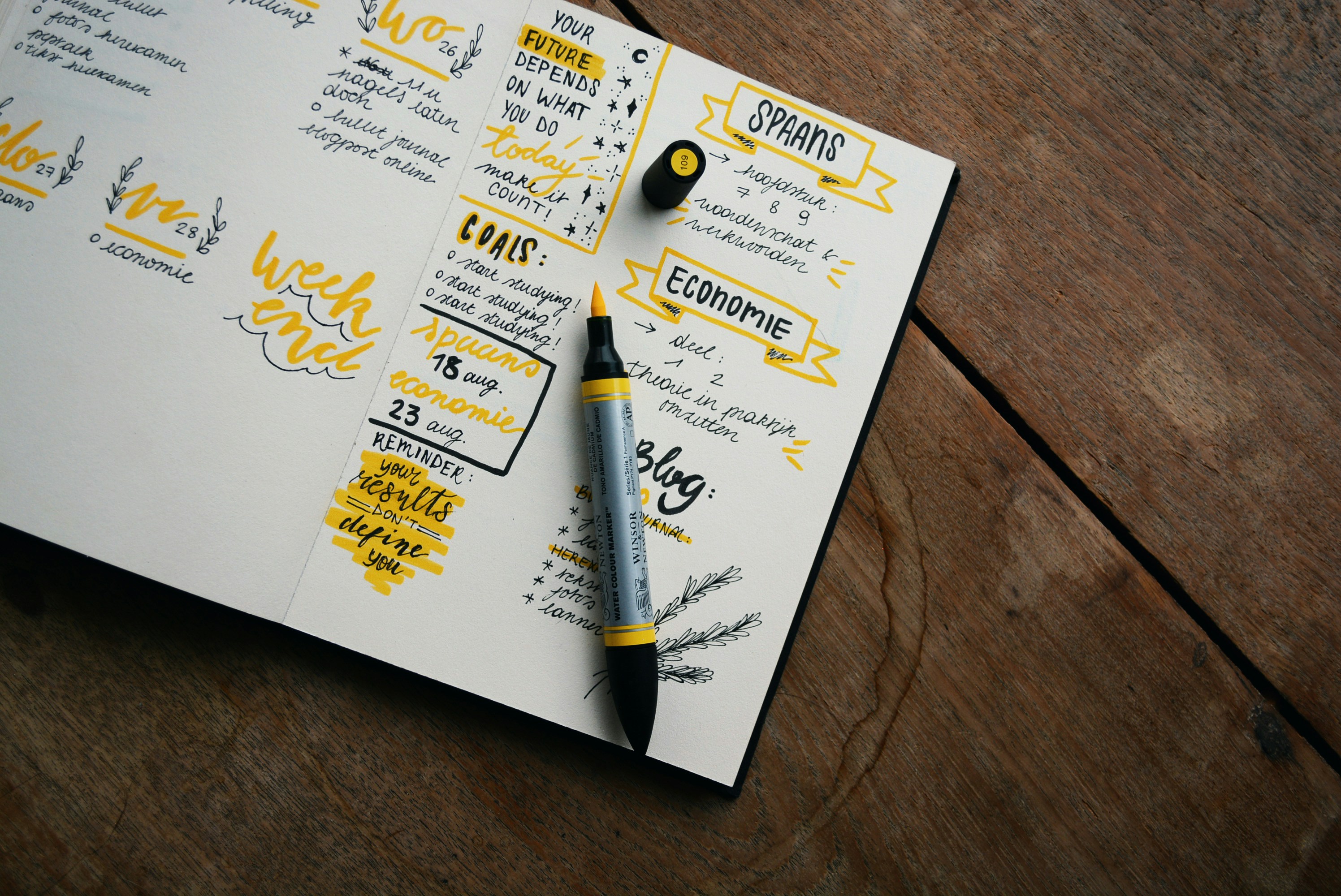
Step 1: Start with Your Production Checklist, Not Your Task List
Before you plot a single deadline, identify the non-negotiable checkpoints of your production cycle. These are the moments where external dependencies create a hard stop: fabric commitment date, factory cut-off for sampling, bulk order placement, freight booking window, delivery target.
Write those five to seven checkpoints in order. This is your production checklist. Everything else gets built around it, not added on top of it. When your checklist is visible, you stop confusing urgency with importance. You know what actually cannot move and what just feels like it cannot.
Step 2: Map Your Energy, Not Just Your Hours
This is the part most production systems skip entirely. You have a rhythm. There are days of the week, and times of day, when you make better decisions, think more clearly, and create with less friction. There are also days when you are depleted, context-switching, or recovering from a heavy client or travel period.
Your production calendar needs to account for both.
High-cognition tasks like reviewing a new tech pack, evaluating a strike-off, or negotiating lead times with a factory should be scheduled during your peak windows. Administrative tasks like sending approvals, filing samples, or updating trackers belong in your lower-energy periods. This is not about being precious with your time. It is about protecting the quality of the decisions that determine whether your collection arrives correctly.
Look at your calendar for the next season and ask honestly: where are the stretches where I am trying to do deep creative work while also managing logistics and client deliverables simultaneously? Those are the places your calendar is setting you up to fail, regardless of how talented or disciplined you are.
Step 3: Build Creative Recovery Time Into the Timeline
Recovery time is not a luxury. It is a production variable.
After major decision points, you need white space. After a fit session that required you to make fifteen judgment calls in two hours, your brain needs recovery before it can evaluate fabric options clearly. After a stressful factory conversation, you need space before you respond to a wholesale buyer inquiry.
If you are looking at your production timeline and every week is fully loaded from Monday through Friday, you do not have a productivity problem. You have a planning problem. Build in half-day buffers after high-intensity milestones. Block one morning per week that has no scheduled production tasks. Protect that time as aggressively as you protect your factory deadlines, because creative clarity is what makes every other part of production work.
Step 4: Replace Task Lists with Visual Production Phases
Endless task lists work against the way designers and creative founders actually process information. They create a sense of infinite obligation without giving you a clear picture of where you are in the arc of production.
Instead, organize your calendar around phases with clear visual markers:
The phases of a standard small-batch production cycle look something like this: Design Finalization, Technical Development, Sampling, Revision and Approval, Bulk Production, Quality and Logistics, and Delivery. Each phase has a defined start point, a defined end point, and a set of decisions that need to be made within it.
When you can see your season as a series of phases rather than a list of tasks, two things happen. First, you understand where you actually are at any given moment. Second, you can see when a phase is running long before it derails the one after it. That is the kind of visibility that prevents the emergency shipments, the panic calls to factories, and the compressed timelines that cost significantly more money than a well-structured plan.
Step 5: Make the Calendar a Living Document, Not a Static Plan
A production calendar that does not get updated is just a wish list. Build a weekly check-in into your schedule, fifteen minutes on Monday morning, where you review the current phase, flag anything that has shifted, and adjust the next two weeks accordingly.
This is where most founders drop off. The season starts, momentum builds, and the calendar becomes something you avoid updating because it feels like admitting you are behind. But the founders who move through production with the least friction are not the ones with perfect plans. They are the ones who stay honest about where their plan has drifted and correct it early.
Production does not punish imperfection. It punishes the delay between noticing a problem and addressing it.
A Note on Planning Tools
The specific tool matters less than you think. Whether you use a shared spreadsheet, a project management platform, or a physical studio board, what matters is that the system is visible, honest, and actually reflects how you work rather than how you think you should work.
The most expensive production calendar is the one that looks thorough but does not get used.
If you are ready to stop rebuilding your system from scratch every season, the Oceo Luxe Studio Systems template gives you a structured production calendar framework built specifically for small-batch luxury brands. It accounts for phase-based planning, energy mapping, and factory lead time buffers from the start, so you are not improvising the infrastructure every time.
Download the free production calendar template and get an early look at what Studio Systems includes.
Your calendar should be working for you. Let's make sure it is.
Kerri Bridgman is a fashion production strategist and the founder of Oceo Luxe. She helps independent luxury brands build the operational systems that make great collections actually happen.
Studio Systems
Operational Systems for Fashion Brands
Production frameworks, supplier management, and live Q&A. Built from real-world production leadership.
Explore Studio SystemsWork Together
Strategic Operational Partnership
Embedded production leadership and systems architecture for fashion brands ready to operate at a higher level.
Learn More


